
Authored By Jude Comber 17.11.25
Digital adoption in social housing is no longer optional, t’s essential. From tenant portals and IoT-enabled maintenance to data platforms and AI-driven insights, technology has the potential to streamline operations and improve resident experience. Yet many organisations still fall into the trap of adopting tools before understanding the actual challenges they’re meant to solve. This is where challenge framing and iterative scoping become crucial.
Reframing the Challenge Before Choosing the Tool
Technology can only be effective when it addresses the right problem. Challenge framing involves defining the core issue clearly and collaboratively before moving toward solutions. In social housing, this means looking beyond surface-level frustrations (“the system is slow”) to understand deeper systemic needs (“our workflows don’t reflect the real-life journey of tenants”).
Good challenge framing asks:
- What resident or staff pain points are we trying to solve?
- What data do we actually need and what do we already have?
- How do cultural, process, and policy constraints shape the challenge?
- How will we know if the technology is improving outcomes?
By aligning stakeholders around a shared understanding of the challenge, organisations prevent costly missteps, like over-customised systems, unused features, or solutions that don’t integrate well with existing processes.
The Shift to Iterative Technology Strategy
Traditional technology programmes in social housing are large, waterfall-style projects: specify everything up front, procure, implement, and then “set and forget” for several years. But social, financial, and regulatory landscapes change quickly—and residents’ digital expectations shift even faster.
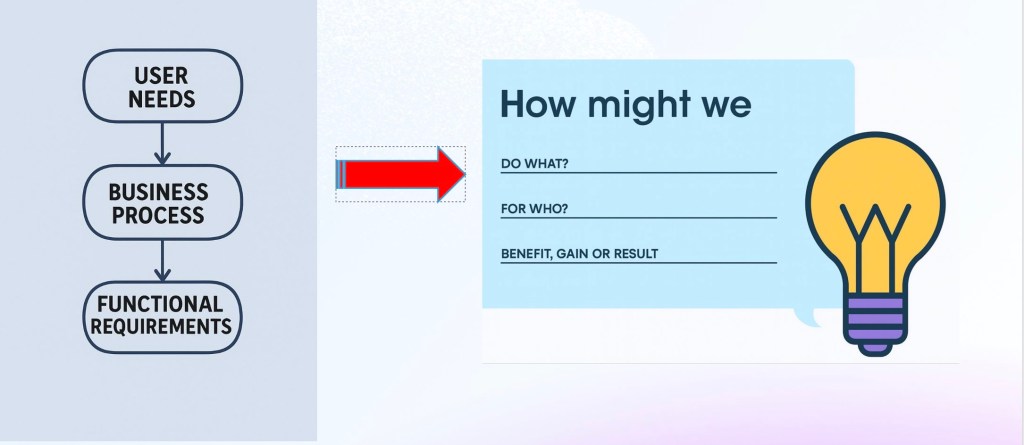
Stop thinking in functional requirements and start to think how might we do what, for who and what are the benefits, gains or results.
An iterative approach allows technology strategies to adapt as real-world learning emerges.
This can include:
- Proof-of-concept pilots to de-risk innovations before scaling
- Agile delivery cycles that incorporate continuous tenant and staff feedback
- Incremental releases rather than big-bang implementations
- Usability testing to validate assumptions early
- Post-launch monitoring that informs ongoing optimisation
Iteration turns technology from a one-off procurement into an evolving service.
Scoping for Iteration
To support iterative delivery, scoping needs to move from fixed feature lists to problem-based, outcome-led frameworks. Instead of starting with “We need a new system,” scoping shifts to “We need to reduce missed appointments,” or “We need better insight into asset risk.”
Effective iterative scoping includes:
- High-level outcomes rather than detailed, rigid requirements
- Defined guardrails (budget, timeline, regulatory needs) without prescribing the solution
- A roadmap that welcomes change, not one that’s threatened by it
- Cross-functional discovery teams who test assumptions early
- Governance models that allow pivots when insights emerge
This creates space for learning, experimentation, and evidence-based decision-making.
A Better Path Forward
Challenge framing and iterative scoping aren’t just project tools, they’re a strategy for building technology that genuinely improves the lives of residents and the efficiency of housing providers.
By shifting away from large, monolithic implementations and toward flexible, feedback-driven delivery, social housing organisations can modernise with confidence.
Technology should evolve with the community it serves. An iterative approach ensures it always can.
 Digital Housing Change
Leave a comment